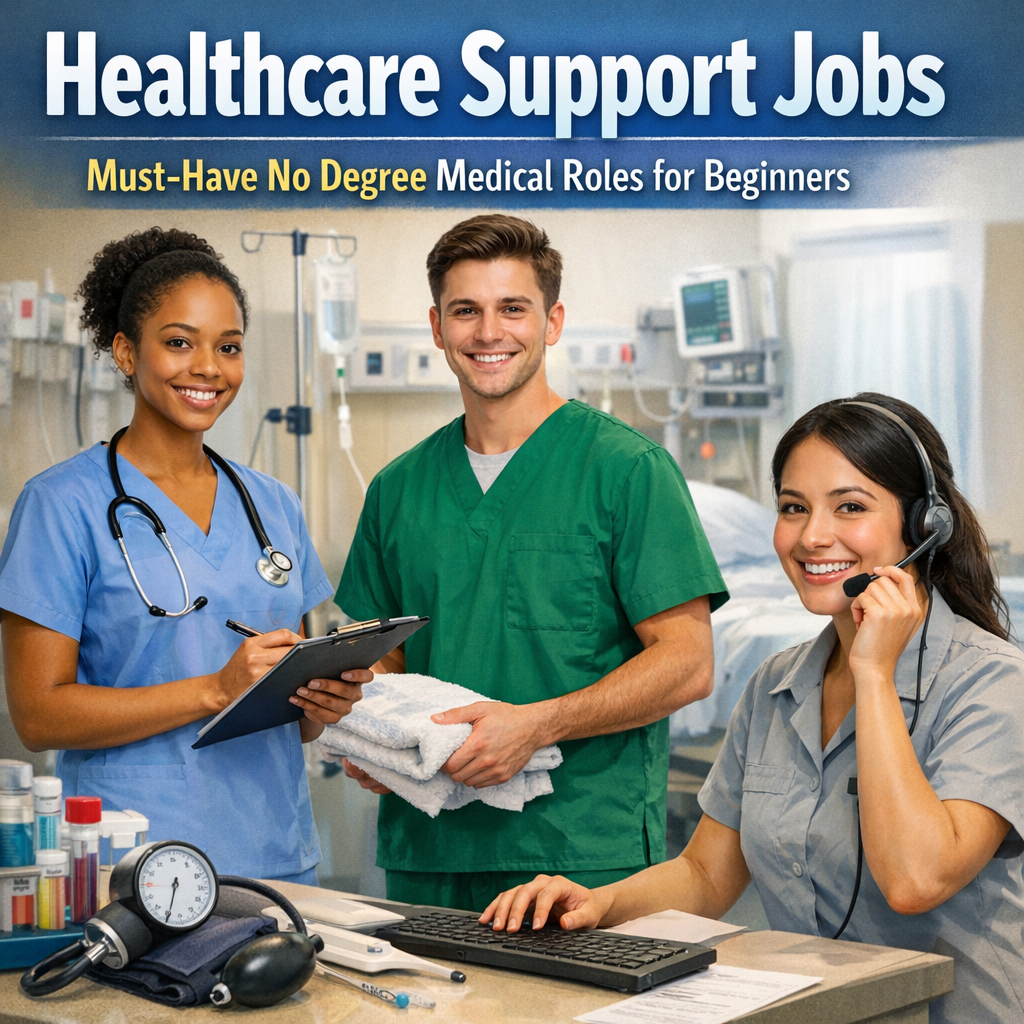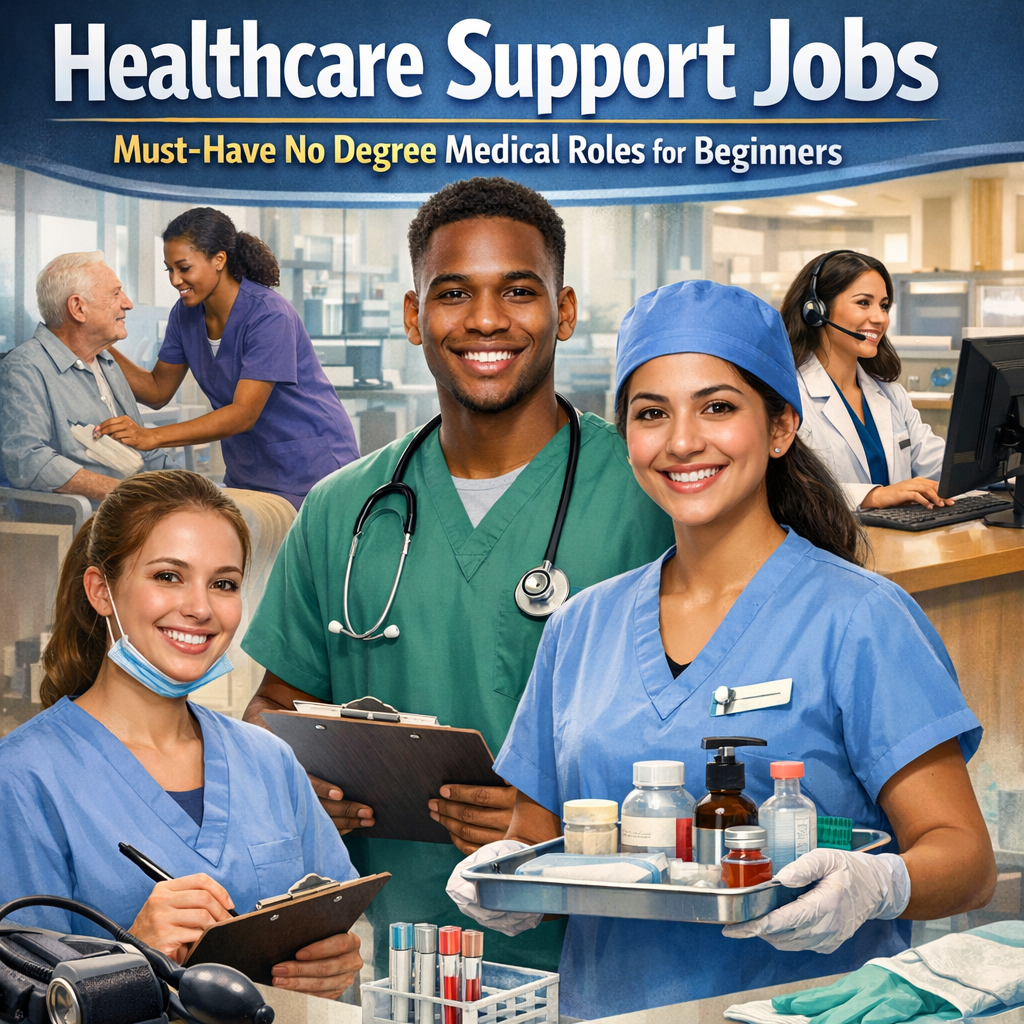
Healthcare Support Jobs: Must-Have No Degree Medical Roles for Beginners
Entering the healthcare field can seem overwhelming, especially for those without a formal degree. Fortunately, healthcare support jobs offer a practical pathway into medical careers, allowing beginners to make meaningful contributions to patient care without the need for extensive schooling. These no degree medical roles provide essential services that keep healthcare settings running smoothly, making them ideal for anyone eager to start a career in medicine with minimal barriers to entry.
What Are Healthcare Support Jobs?
Healthcare support jobs encompass a broad range of positions that assist trained medical professionals by carrying out important, often hands-on tasks. These roles are crucial in hospitals, clinics, long-term care facilities, and other health-related environments. Unlike doctors or registered nurses, many of these jobs do not require a college degree but instead focus on on-the-job training, certification programs, or short-term courses.
For beginners looking to enter the healthcare industry, support roles provide a valuable introduction to medical environments, patient interactions, and the healthcare system. From assisting patients with daily activities to managing medical supplies, healthcare support jobs are foundational and often serve as stepping stones to more advanced medical careers.
Why Consider No Degree Medical Roles?
Choosing no degree medical roles has multiple benefits for individuals new to healthcare:
– Accessibility: Without the need for a four-year degree, these roles are accessible to a wider range of people, including those seeking a career change or immediate employment.
– Quick Entry: Many healthcare support positions require only short-term training or certification, allowing individuals to start working within weeks or months.
– Hands-On Experience: These jobs provide direct patient contact and valuable practical experience, helping develop skills that are essential for future medical roles.
– Job Stability: The healthcare industry consistently shows strong demand for support staff, offering reliable employment opportunities.
– Pathways for Advancement: Starting in a support role often opens doors to further education and promotion into clinical or administrative positions.
Popular Healthcare Support Jobs for Beginners
Below are some of the most common and in-demand no degree medical roles within healthcare support:
1. Certified Nursing Assistant (CNA)
One of the most recognized healthcare support jobs, CNAs play a critical role in patient care by helping with hygiene, mobility, feeding, and monitoring vital signs. Becoming a CNA typically requires completing a state-approved training program and passing a certification exam. CNAs are essential in nursing homes, hospitals, and home health care settings.
2. Medical Assistant
Medical assistants perform both administrative and clinical duties, such as scheduling appointments, updating medical records, taking patient histories, and preparing patients for examinations. While some employers prefer candidates with formal training certificates, many on-the-job training options exist. This versatile role allows beginners to gain experience with both office and patient care responsibilities.
3. Phlebotomist
Phlebotomists specialize in drawing blood for tests, transfusions, research, or donations. This no degree medical role requires completing a certified training program, often lasting just a few months. Phlebotomists work mainly in hospitals, labs, and blood donation centers, with steady demand due to the essential nature of their duties.
4. Patient Care Technician
Often working alongside nurses, patient care technicians provide direct care similar to CNAs but may also perform EKGs or assist with basic clinical tasks. Training varies by employer, but many hospitals offer in-house programs to develop these skills. This role is an excellent entry point for those interested in clinical work but not yet ready for nursing school.
5. Home Health Aide
Home health aides assist elderly, disabled, or chronically ill clients with daily living activities in their homes. The training is typically brief and includes certification depending on state regulations. This job appeals to compassionate individuals who prefer personalized, one-on-one patient care outside of a traditional healthcare facility.
How to Succeed in Beginner Healthcare Careers
To thrive in healthcare support jobs, beginners should focus on several key areas:
– Certification and Training: Pursue relevant certifications (like CNA or phlebotomy certification) to increase employability and confidence.
– Strong Communication Skills: Effective communication with patients and healthcare teams enhances job performance and patient satisfaction.
– Attention to Detail: Accuracy in following medical protocols and documentation is critical for safety and quality care.
– Compassion and Patience: Working with ill or vulnerable populations requires empathy and understanding.
– Continuous Learning: Many healthcare careers start here—engage in ongoing education to advance skills or transition into higher-level roles.
The Future of No Degree Medical Roles
The healthcare industry is growing rapidly, driven by aging populations and technological advancements. This growth means an increasing need for healthcare support jobs to fill vital roles that require flexibility and adaptability but not necessarily a formal college degree. For beginners, these positions provide a launchpad into rewarding and stable medical careers with ample opportunity for growth.
Conclusion
Healthcare support jobs represent an excellent opportunity for anyone seeking to break into the medical field without the time or expense of a degree. These no degree medical roles offer beginners practical experience, a chance to make a difference in patient care, and a pathway to career advancement. Whether as a nursing assistant, medical assistant, or phlebotomist, these positions can be the first step toward a lifelong, fulfilling career in healthcare. For those eager to start a medical journey today, embracing these roles offers readiness, relevance, and real-world impact.