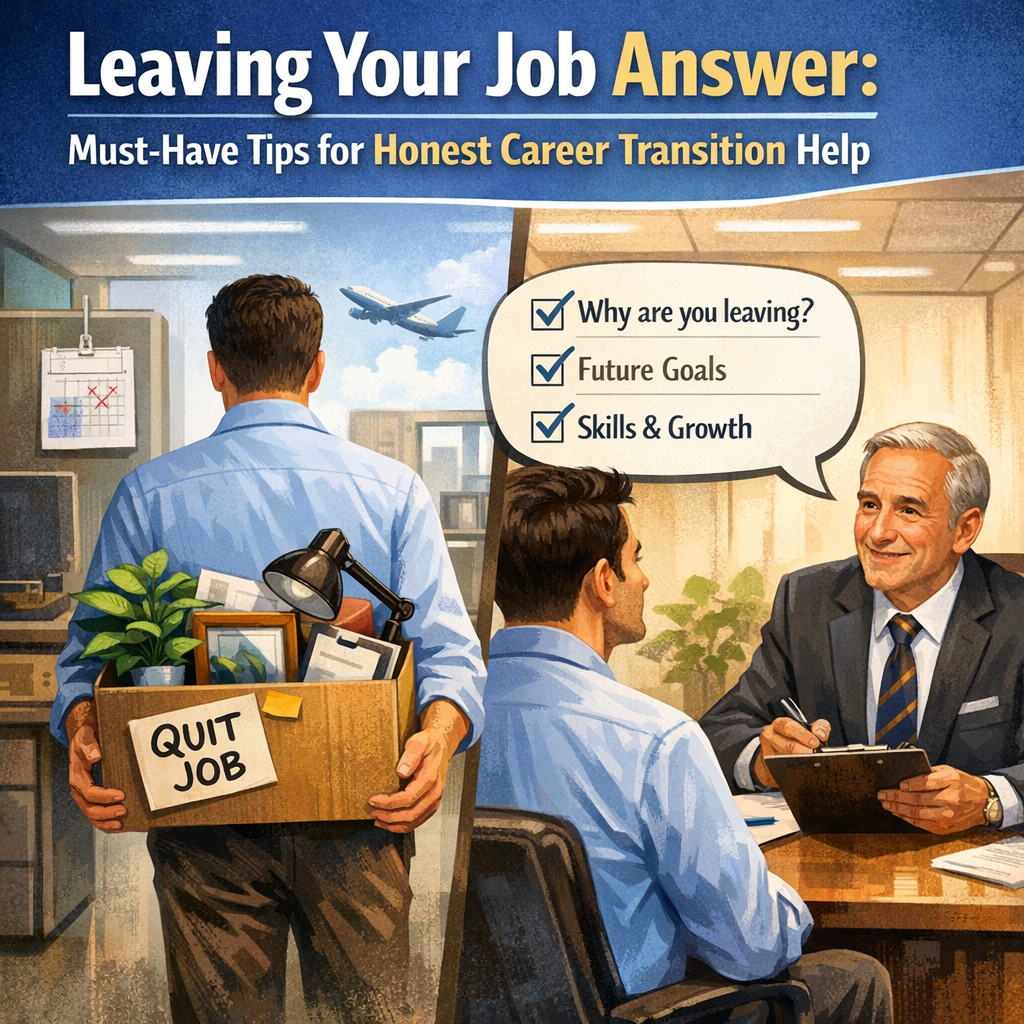
Leaving Your Job Answer: Must-Have Tips for Honest Career Transition Help
When it comes to leaving your job answer during an interview, many candidates find themselves caught between being honest and presenting themselves in the best light. It can feel like a delicate balancing act: how do you explain why you’re moving on without sounding negative or unprofessional? Honesty is always the best policy, but delivering it skillfully can make a significant difference in how prospective employers perceive your career intentions. In this article, we’ll explore effective strategies for providing a thoughtful and candid leaving your job answer, while also offering valuable career transition help.
Why Honesty Matters in Your Leaving Your Job Answer

Interview honesty is crucial when discussing your reasons for leaving a previous position. Employers value transparency, as it reflects your integrity and helps them understand your motivation. Fabricated or overly vague responses may raise red flags, leaving interviewers to wonder what you might be hiding. Instead, a well-prepared, honest answer positions you as a professional who learns from experience and looks forward to new challenges.
However, honesty doesn’t mean divulging every negative detail. It’s about striking the right tone—acknowledging your reasons without sounding bitter or judgmental. This approach fosters trust and sets a positive tone for the rest of the conversation.
Common Reasons People Leave Jobs (And How to Frame Them)
Before crafting your leaving your job answer, consider the most common motivations people have for seeking new roles. These include:
– Desire for career growth and new challenges
– Seeking a better work-life balance
– Relocation or personal circumstances
– Company restructuring or layoffs
– Misalignment with company culture or values
When addressing any of these reasons, focus on what you learned and how the change aligns with your career goals. For example:
– Instead of saying, “My previous company was disorganized,” you can say, “I’m looking to work in an environment where strategic planning and clear communication are prioritized.”
– Rather than, “I didn’t get along with my manager,” try, “I’m seeking a role where collaboration and mentorship are emphasized.”
This reframing maintains honesty while demonstrating professionalism.
Tips for Crafting an Honest Leaving Your Job Answer
1. Be Clear and Concise
Prepare a straightforward explanation that summarizes why you’re moving on. Avoid long-winded or overly personal details. Keeping it to one or two sentences ensures your answer is focused and respectful of the interviewer’s time.
2. Emphasize Growth Opportunities
Highlight that your decision is driven by a desire to develop new skills, take on new responsibilities, or make a greater impact. This shows ambition and a forward-thinking mindset.
3. Stay Positive
Even if your previous experience had challenges, don’t dwell on negative aspects. A positive spin reflects emotional intelligence and professionalism, both traits employers appreciate.
4. Practice Your Response
Rehearse your leaving your job answer so it sounds natural and confident. This preparation helps reduce nerves and ensures you communicate your points clearly.
5. Tailor Your Answer to the Role
Connect your departure reasons to what the new job offers. For example, if you’re changing industries or job functions, explain how this transition aligns with your evolving career goals.
Seeking Career Transition Help: Additional Support Tools
Making a career change or simply moving on from a current job can feel daunting. Besides preparing a strong leaving your job answer, consider seeking career transition help to make the process smoother:
– Career Coaches: Professionals can assist in clarifying your goals, improving your interview skills, and boosting your confidence.
– Resume Writers: Expert help in tailoring your resume to highlight transferable skills can attract the attention of hiring managers.
– Networking Groups: Connecting with others in your desired field provides insights into industry trends and new opportunities.
– Online Courses: Upskilling or gaining certifications enhances your qualifications and shows a commitment to learning.
– Job Search Platforms: Using specialized websites can broaden your exposure to relevant job openings.
Leveraging these resources not only boosts your chances of landing the right role but also equips you with the mindset and tools for a successful transition.
The Importance of Authenticity in Career Transitions
In today’s job market, authenticity matters more than ever. Hiring managers want to see a real person behind the resume who is transparent and self-aware. Your leaving your job answer is your chance to demonstrate this authenticity. Avoid overly rehearsed or generic replies and instead offer a genuine narrative of your career journey.
Remember, everyone’s professional path has ups and downs. Being honest about your experiences while emphasizing your eagerness to grow reassures employers that you’re ready for the next chapter.
Conclusion
Crafting a thoughtful and honest leaving your job answer is an essential skill in the job search process. When paired with effective career transition help, you position yourself as a credible and motivated candidate. Focus on clarity, positivity, and alignment with your goals, and you’ll be well on your way to navigating your career journey with confidence and professionalism. By embracing transparency and seeking the right support, you can turn what might feel like a difficult conversation into a powerful opportunity to showcase your readiness for new challenges.