Transcription Jobs: Must-Have Remote Audio to Text Roles for Beginners
Transcription jobs offer a fantastic entry point for individuals seeking beginner typing work that can be done entirely from home. These remote audio to text roles have surged in demand due to growing needs across industries for accurate, timely, and accessible documentation of spoken content. Whether you are a student, stay-at-home parent, or someone looking to supplement your income with flexible work, transcription presents an ideal opportunity to develop skills while earning money remotely.
In this article, we will explore essential information about transcription jobs, highlight must-have remote roles for beginners, and offer tips to help you succeed in this expanding field.
What Are Transcription Jobs?
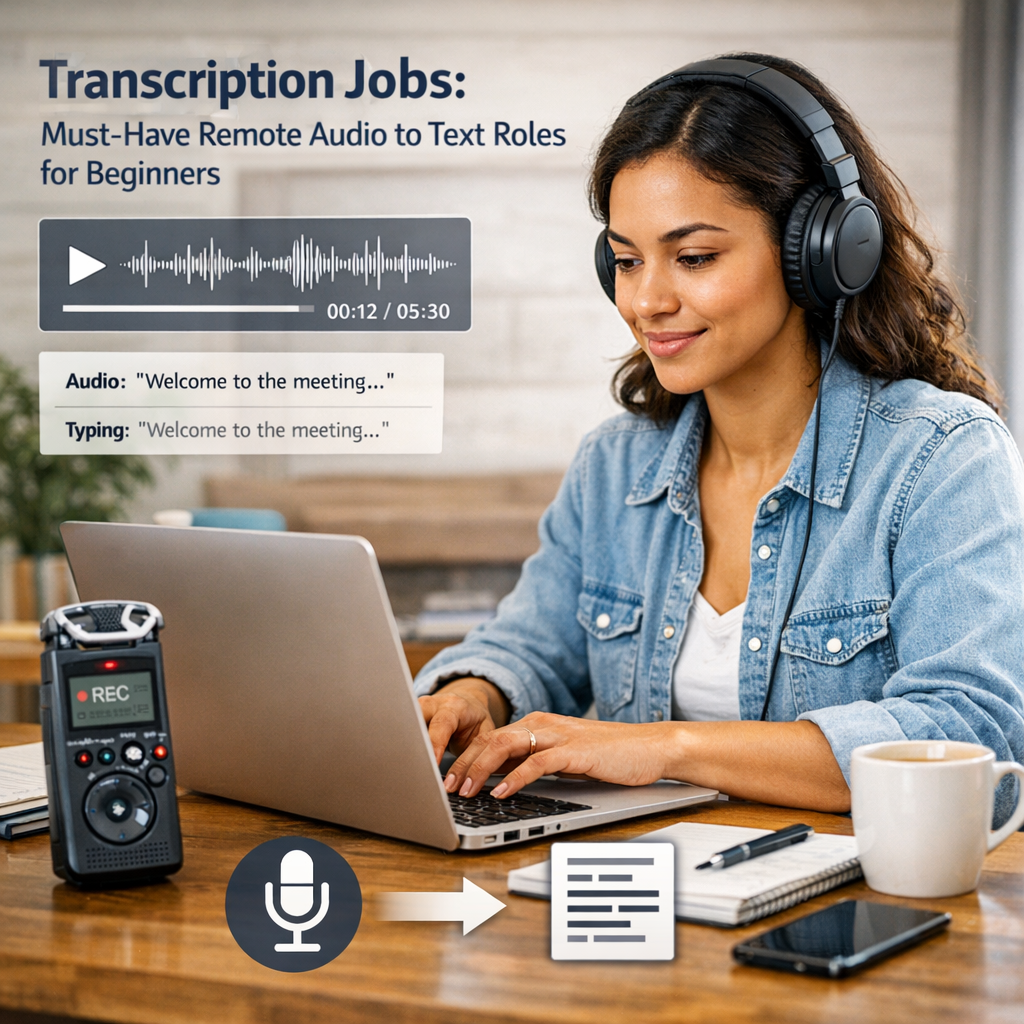
At their core, transcription jobs involve converting spoken words from audio or video files into written text. These roles require good listening abilities, fast and accurate typing, and a keen eye for detail to ensure that all information is captured correctly. Transcribers often work on various types of content, such as interviews, podcasts, webinars, medical dictations, legal proceedings, and more.
Because transcription can often be completed asynchronously, it lends itself well to remote work setups, providing individuals with flexibility regarding when and where they work.
Why Beginners Should Consider Transcription Jobs
For those new to the field of remote work, beginner typing work such as transcription jobs serves as an excellent gateway. Here’s why:
– Low Barrier to Entry: Most transcription positions do not require advanced qualifications or specialized education. Basic typing skills and a good command of the language are usually sufficient.
– Flexible Scheduling: Since many transcription tasks are deadline-based rather than fixed-hour jobs, you can work around your own schedule.
– Skill Development: You can enhance typing speed, improve listening comprehension, and learn industry-specific terminology, all of which add value to your professional profile.
– Variety of Fields: With industries like medical, legal, business, and media requiring transcripts, you can find niches that match your interests and expertise.
Must-Have Remote Audio to Text Roles for Beginners
Certain transcription roles are especially suited for beginners stepping into remote audio to text work. These positions typically come with straightforward audio and require less technical knowledge, making them ideal for newcomers.
1. General Transcription
General transcription involves converting everyday audio content such as interviews, meetings, conferences, or podcasts into text. This area is broad and often requires only basic typing and listening skills. Many transcription companies offer entry-level roles here and provide style guides to help you format transcripts correctly.
2. Podcast Transcription
With podcasts growing in popularity, there’s high demand for transcribing episodes to enhance accessibility, support SEO, and provide supplementary content. Beginners can start with podcasts that have clear audio and slower speech, making the process smoother while learning the ropes of transcription.
3. Interview Transcription
Interview transcription jobs are common in market research, journalism, and academic studies. The audio quality varies but often includes clear voices with limited background noise. This niche is well-suited for beginners aiming to build confidence in accurately capturing conversations verbatim.
4. Captioning and Subtitling
Though slightly different from pure transcription, captioning involves transcribing speech and syncing it with video content. Beginners interested in multimedia might find captioning a rewarding place to start, particularly with tools that automatically sync text, helping you learn technical workflow along the way.
Tools and Tips to Excel in Remote Audio to Text Roles
Success in transcription jobs depends not only on your typing speed but also on the tools and strategies you employ. Here are some recommendations to boost your efficiency and quality:
– Invest in a good headset: Noise-canceling headphones help you catch every word without distraction.
– Use transcription software: Apps like Express Scribe or oTranscribe can facilitate audio playback controls and text input simultaneously.
– Practice typing regularly: Improving your words-per-minute rate directly impacts your earning potential and job opportunities.
– Familiarize yourself with style guides: Whether following company-specific guidelines or industry standards, this helps increase accuracy and consistency.
– Start with short audio segments: Break down longer files into smaller chunks to maintain focus and reduce errors.
– Proofread carefully: Always review your transcripts before submission to eliminate mistakes and ensure clarity.
Where to Find Transcription Jobs as a Beginner
Several websites and platforms offer remote audio to text roles suitable for beginners. Some popular options include:
– Rev – Offers general and specialized transcription with a relatively straightforward application process.
– Scribie – Known for entry-level transcription work with a pay-per-audio-minute model.
– TranscribeMe – Provides training for beginners and a steady flow of short audio tasks.
– Upwork and Fiverr – Freelance marketplaces where you can create profiles to attract transcription gigs.
– GoTranscript – Welcomes beginners with no previous transcription experience, offering flexible assignments.
Final Thoughts
Transcription jobs represent a practical and accessible avenue for anyone looking to dive into the world of remote audio to text roles. They provide a chance to earn an income, sharpen typing and listening skills, and join the expanding gig economy with minimal upfront investment. By targeting beginner-friendly transcription opportunities, using the right tools, and maintaining attention to detail, you can set yourself up for success in this rewarding form of beginner typing work.
If you’re searching for remote work options that can grow with your skillset and schedule, transcription jobs should definitely be on your radar. Start small, stay consistent, and gradually build your portfolio in this rapidly evolving field.