Resume for Jobs Abroad: Stunning Tips for the Best International CV
Creating a compelling resume for jobs abroad requires strategic tailoring that goes beyond the typical resume formats used in your home country. When applying for positions overseas, your document must resonate with recruiters who have different expectations and hiring standards. Companies reviewing global applications often scrutinize resumes for clarity, relevance, and cultural fit, so understanding how to craft an international CV is essential for standing out in a competitive job market.
In this article, we’ll explore practical tips and nuanced advice to help you build an impressive resume for jobs abroad, boost your chances of landing interviews, and ultimately secure your dream job internationally.
Understanding the Importance of the International CV
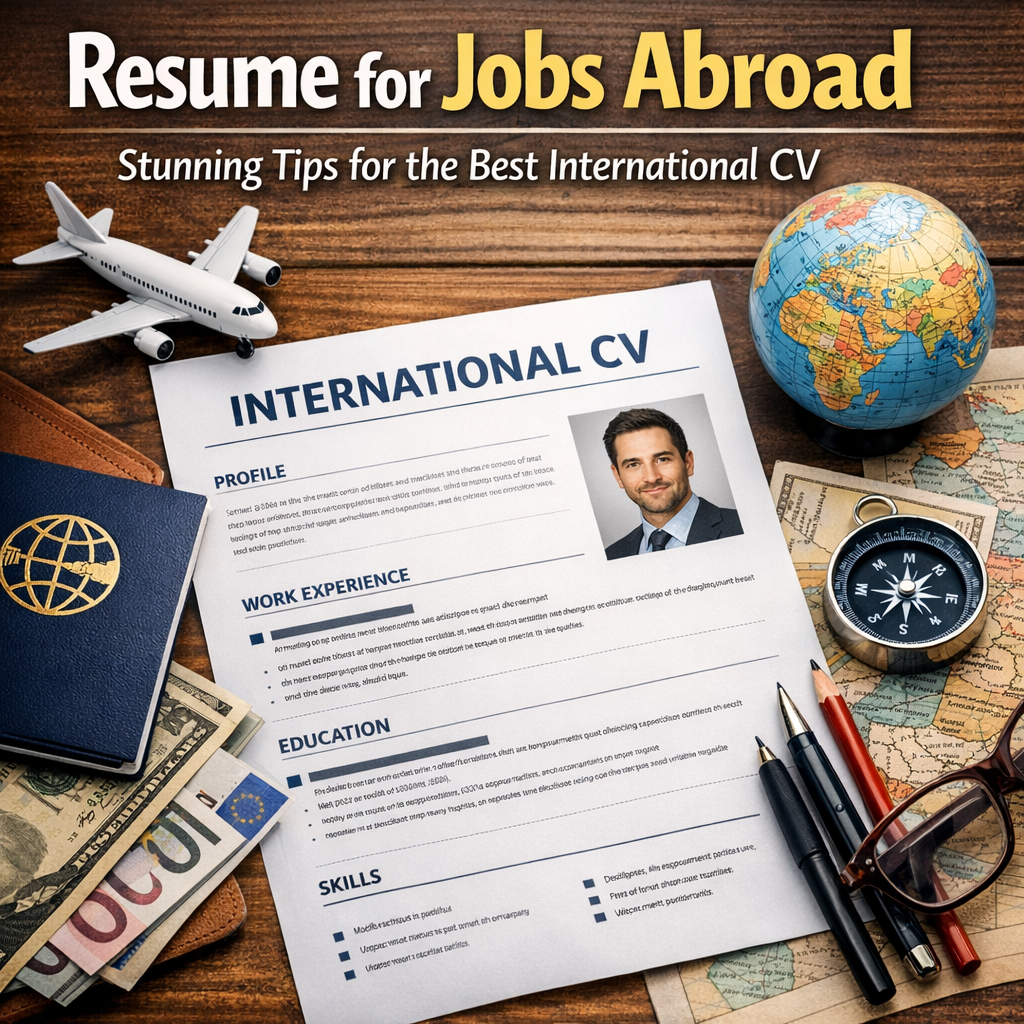
An international CV is more than just a translated version of your local resume. It’s a document adapted to meet the demands of employers in different countries and industries. While the core purpose of any CV remains the same—showcasing your skills and experience—the formatting, tone, and content should reflect global standards.
Recruiters in various regions often prioritize specific elements such as brevity, measurable achievements, keywords relevant to the role, and clear presentation. For example, European Union countries may prefer a more detailed CV with a professional photo, while in the United States or UK, concise resumes without pictures are more common. Understanding these differences is vital when crafting your resume for jobs abroad.
Key Components of a Successful Resume for Jobs Abroad
Creating an effective resume for jobs abroad involves several essential elements designed to appeal across borders. Here are some key components to include:
1. Contact Information and Professional Summary
Clearly state your contact details, including an internationally accessible phone number and email address. If applying outside your home country, include your LinkedIn profile or personal website to demonstrate your professional presence online.
A succinct professional summary or objective at the top should highlight your international experience (if any), language skills, and your motivation to work abroad. Tailor this summary depending on the country and job you’re applying for to make an immediate impact.
2. Emphasize Relevant Experience and Achievements
Focus on accomplishments that showcase your ability to operate successfully in multicultural environments. Use quantifiable results wherever possible, like sales growth percentages, team sizes managed, or project durations. These metrics are universally understood and valued in global applications.
Don’t just list job responsibilities; describe your contributions. Highlight roles involving international clients, cross-border collaboration, or experience working with diverse teams—valuable skills for overseas employers.
3. Education and Certifications
Mention your academic credentials with clear dates and institutions. If you hold any internationally recognized qualifications or certifications, prominently include these to strengthen your global appeal.
For some countries, including your GPA might be standard, while others may prefer to focus strictly on degrees and certifications. Research norms before submitting.
4. Language Proficiency and Cultural Competence
If you speak multiple languages, list your proficiency levels using accepted scales (like CEFR or ILR). Language skills boost your adaptability in foreign settings.
Additionally, mention any cultural training, international assignments, or volunteer work abroad to exhibit your cultural competence, an asset for companies seeking diverse and flexible employees.
Formatting Your Resume for Jobs Abroad
Keep It Simple and Professional
Avoid flashy graphics, complex fonts, or unconventional formats that may not translate well across countries or applicant tracking systems (ATS). Stick to easy-to-read fonts like Arial, Times New Roman, or Calibri. Use consistent formatting for headings, bullet points, and spacing.
Tailor to Local Conventions
Research country-specific resume standards. For example, resumes in Japan often include a photo and date of birth, whereas in Australia, this is less common and sometimes discouraged to prevent bias.
Format your CV length according to local expectations. While one to two pages is standard in the US and UK, some European countries expect longer CVs packed with more detail.
Incorporate Keywords and Phrases
Many international employers use ATS software to filter applications based on keyword matches. Analyze job descriptions carefully and embed relevant keywords naturally into your CV, such as technical skills, industry jargon, and certifications.
Final Tips to Perfect Your Resume for Jobs Abroad
– Proofread Carefully: Errors can create a negative impression and reduce professionalism, especially when applying overseas.
– Include a Cover Letter: Most global applications require a tailored cover letter explaining why you want to work abroad and how your skills fit the role.
– Seek Feedback: Ask native speakers or professionals with international experience to review your international CV and provide insights.
– Highlight Adaptability: Make clear your willingness to relocate and adapt to new cultures, emphasizing flexibility.
– Be Honest: Never exaggerate qualifications or experience, as background checks may be more stringent for global hires.
Conclusion
Crafting an effective resume for jobs abroad can be a challenging but rewarding process. By understanding the nuances of international recruitment and carefully customizing your CV to meet global expectations, you position yourself to succeed in diverse job markets. Use these stunning tips to create your best international CV, embrace cultural differences, and confidently submit your global applications—your dream job abroad is within reach!