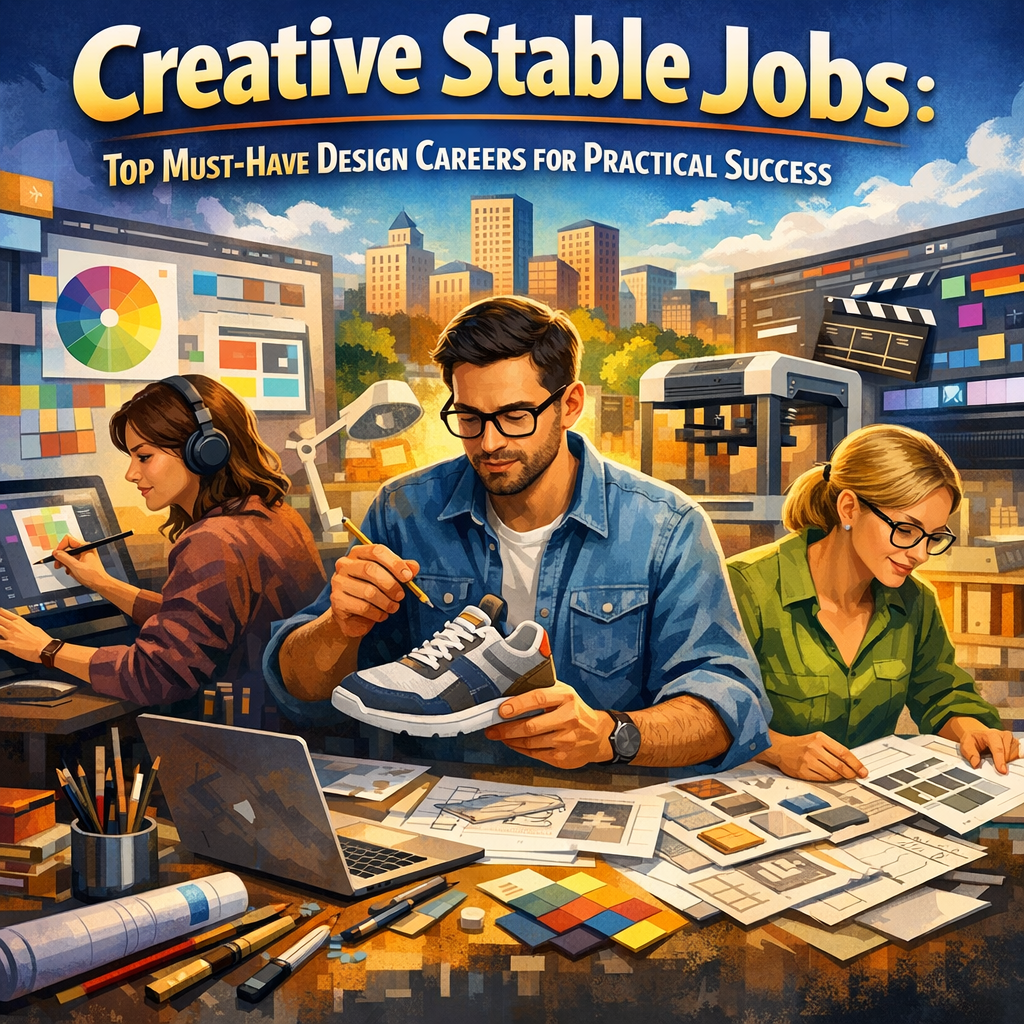
Creative Stable Jobs: Top Must-Have Design Careers for Practical Success
In today’s rapidly evolving professional landscape, creative stable jobs have become increasingly valuable. Individuals who seek to balance imaginative expression with steady income are often drawn to design careers that offer both creative freedom and long-term security. Practical creative work not only provides tangible outcomes but also ensures career sustainability in an ever-competitive market. Whether you’re a fresh graduate, mid-career professional, or someone looking to pivot toward a more stable yet creatively fulfilling path, understanding which design careers merge artistry with stability is essential.
Understanding the Demand for Creative Stable Jobs
The creative industry is often associated with unpredictability, contract work, or freelance gigs without guaranteed income. However, many design professions break this stereotype by offering structured career paths, clear advancement opportunities, and consistent demand across industries. These roles require innovative thinking and problem-solving skills but are embedded within organizational frameworks that support job security.
Organizations across sectors—including technology, advertising, fashion, and media—rely heavily on skilled designers. As brands continue to emphasize user experience, branding, and aesthetics, the need for professionals who combine creativity with practicality grows. This blend allows creative talent to flourish within roles that can support a stable livelihood.
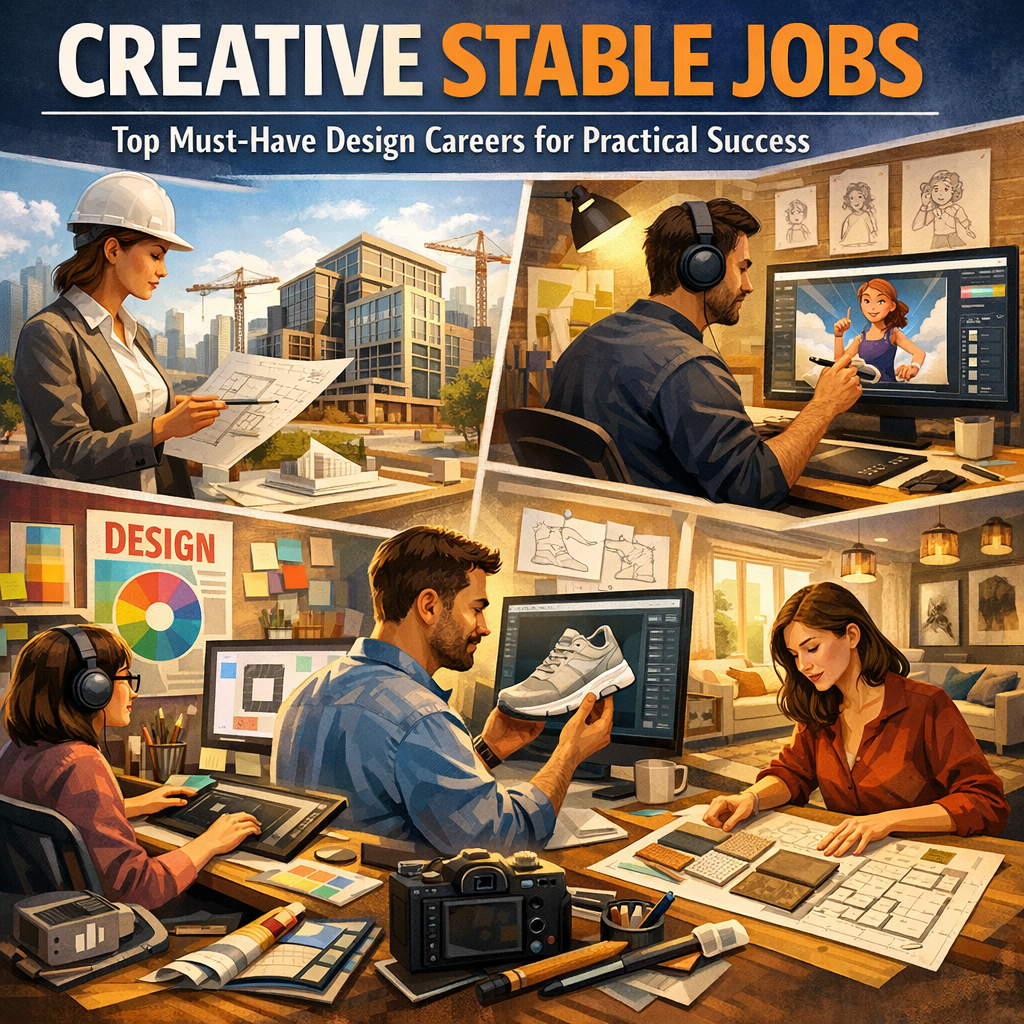
Top Design Careers Offering Creative Stable Jobs
Here are some of the must-have design careers that represent the best balance between creativity and job stability:
1. User Experience (UX) Designer
UX design focuses on enhancing the usability and accessibility of digital products such as websites, apps, and software. A UX designer applies research, psychology, and design principles to create seamless user interactions. Due to the digital transformation affecting nearly all industries, UX designers have a strong demand, making this one of the most secure and creative stable jobs available.
Working as a UX designer offers continuous learning opportunities and involvement in practical creative work since every project requires innovative solutions tailored to users’ needs. Industries like tech, finance, healthcare, and e-commerce all rely on UX expertise.
2. Graphic Designer
Graphic designers remain central to visual communication, creating logos, advertisements, packaging, and digital content across numerous platforms. While historically viewed as a freelance-heavy career, graphic design increasingly provides stable opportunities within corporations, advertising agencies, and media companies.
Graphic designers who specialize in branding and marketing communications often find long-term roles where consistent creative input is needed. Additionally, proficiency in the latest design tools and understanding digital media trends enhances job security in this field.
3. Industrial Designer
Industrial design blends creativity with engineering and manufacturing expertise to develop consumer products, furniture, and appliances. This career demands a practical approach to creative work, balancing aesthetics with functionality and production feasibility.
Companies in automotive, electronics, household goods, and medical equipment sectors employ industrial designers to help create innovative yet market-ready products. This discipline provides a stable career path with opportunities for innovation and tangible output.
4. Interior Designer
Interior designers plan and create functional, appealing indoor spaces for homes, offices, or commercial environments. The ability to merge creativity with practical concerns like space optimization, budget constraints, and building codes makes this career both creative and stable.
Economic cycles influence the construction and real estate markets, but established interior designers with strong client relationships often enjoy steady work. Certification and specialization, such as sustainable design or hospitality interiors, can further stabilize a career in this field.
5. Motion Graphics Designer
Motion graphics designers create animated visuals for commercials, films, video games, and online content. As digital content consumption grows exponentially, the demand for skilled animators and motion designers has surged, creating consistent employment opportunities.
Motion graphics combine artistic skills with technical knowledge in animation software, blending creativity with structured project timelines and deliverables. This career path offers a mix of freelance and in-house roles that can support a stable income.
Keys to Ensuring Practical Success in Creative Stable Jobs
While these design careers offer stability, achieving practical success depends on continuous skill development and adaptability. Here are crucial steps for sustaining a thriving career in design:
1. Master Relevant Tools and Technologies
The design field is tech-driven, so proficiency in software tools like Adobe Creative Suite, Sketch, Figma, or 3D modeling programs is essential. Staying updated with new technologies enhances your value and expands the scope for practical creative work.
2. Build a Strong Portfolio Showcasing Versatility
An impressive portfolio demonstrates your ability to solve problems creatively and meet client or employer needs. Including diverse work samples that highlight both conceptual thinking and execution proficiency boosts employability in stable design roles.
3. Develop Soft Skills
Communication, teamwork, and project management are vital for stability. Many creative roles require collaboration and clear articulation of ideas to stakeholders, making interpersonal skills crucial for career longevity.
4. Continue Learning and Specializing
The design landscape evolves quickly. Pursuing certifications, workshops, or advanced degrees in niche areas like UX research, sustainable design, or augmented reality can position you as a sought-after professional with a stable career trajectory.
Conclusion
Combining creative passion with job security is achievable through well-chosen design careers. The demand for practical creative work remains robust across industries, and roles like UX designer, graphic designer, and industrial designer consistently offer opportunities that balance innovation and stability. By honing your skills, expanding your portfolio, and embracing lifelong learning, you can enjoy both creative fulfillment and practical success in the dynamic world of design.