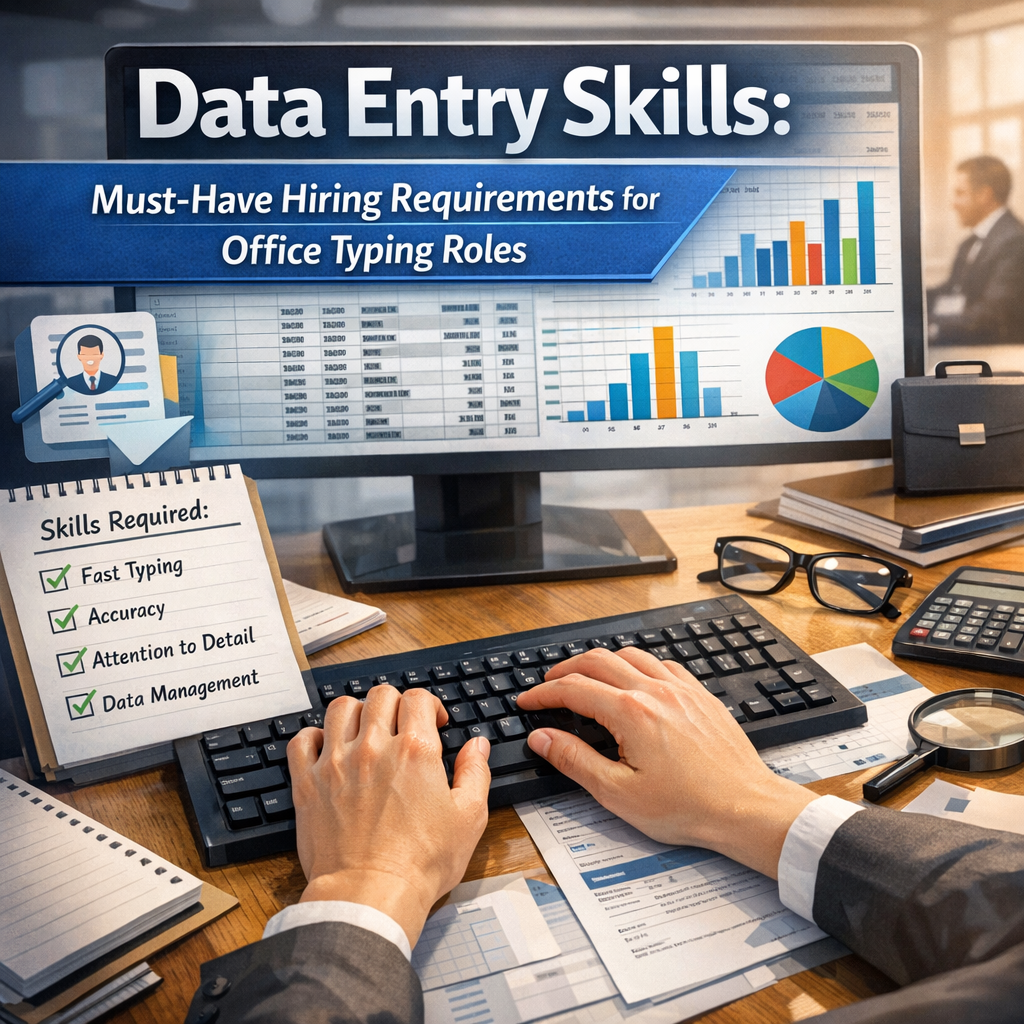
Data Entry Skills: Must-Have Hiring Requirements for Office Typing Roles
In today’s fast-paced office environment, data entry skills have become indispensable for many administrative and clerical positions. Particularly for office typing roles, these skills are not just desired but often serve as essential hiring requirements. Whether the task involves inputting customer information, managing inventory databases, or handling financial records, proficiency in data entry can significantly influence the efficiency and accuracy of operations. Understanding the core competencies and qualities that employers seek in candidates for these positions is crucial for job seekers aiming to stand out in the competitive job market.
Why Data Entry Skills Are Crucial for Office Typing Roles
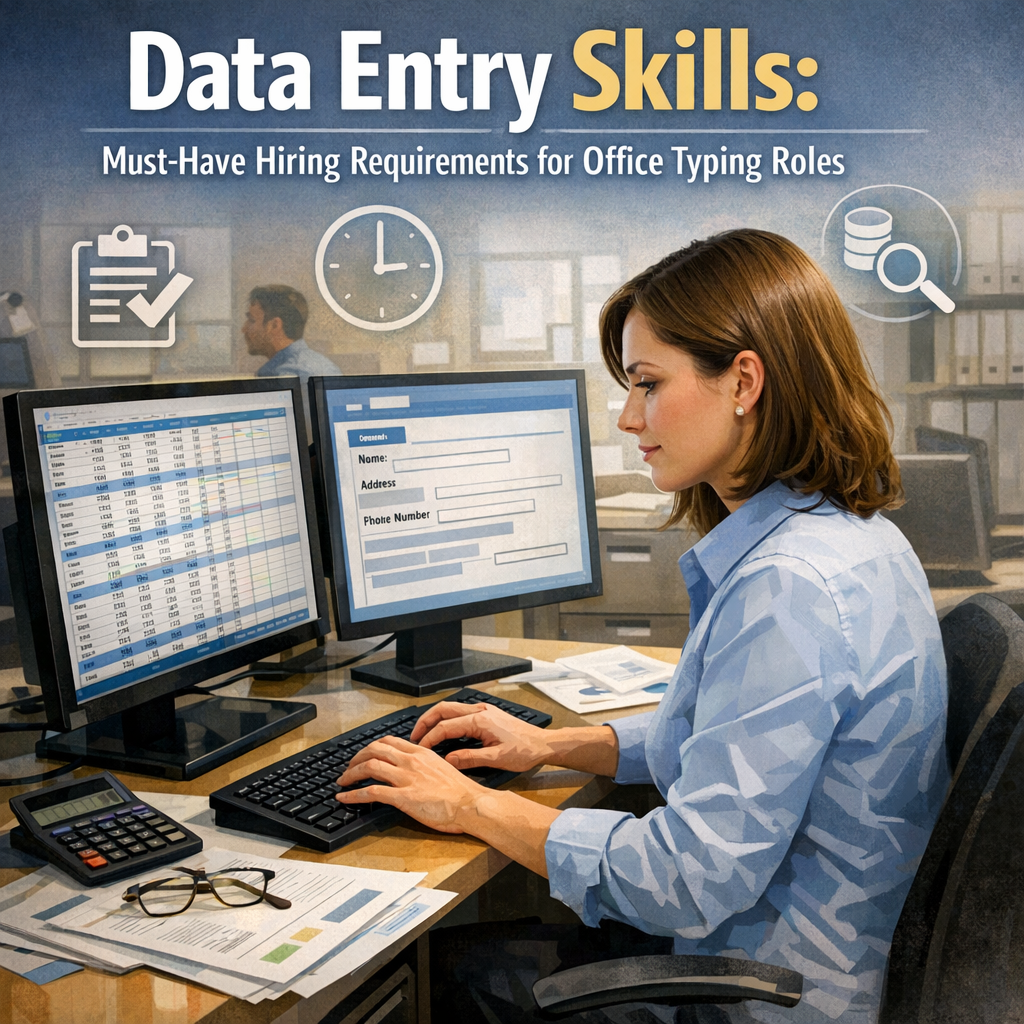
Office typing roles often require professionals to handle vast amounts of information accurately and swiftly. Data entry is more than just typing words into a computer—it demands attention to detail, speed, and the ability to manage information systematically. Efficient data entry supports organizational operations by ensuring that data is processed correctly and promptly, which in turn facilitates decision-making and communication across departments.
Errors in data entry can lead to costly mistakes, from miscommunications to financial discrepancies, making accuracy a top priority. Because of this, many employers view strong data entry skills as fundamental hiring requirements when filling office typing positions.
Key Data Entry Skills That Employers Value
1. Typing Speed and Accuracy
One of the most obvious skills required for office typing roles is the ability to type quickly and accurately. The average typing speed expected can vary depending on the employer, but typically ranges from 40 to 70 words per minute. However, speed alone isn’t enough—accuracy is equally crucial. Candidates who can maintain high accuracy while typing at a fast pace save organizations time and reduce the need for costly corrections.
2. Familiarity with Data Management Software
Data entry is rarely performed using just a basic text editor. Proficiency in software such as Microsoft Excel, Google Sheets, or customer relationship management (CRM) platforms is often a significant hiring requirement. Candidates should be comfortable navigating spreadsheets, using formulas, and managing databases. Additionally, the ability to quickly learn new software tools can be an advantage in office environments where multiple systems may be used.
3. Attention to Detail
The repetitive nature of data entry can sometimes lead to mistakes. A keen eye for detail ensures that data is entered exactly as required, maintaining the integrity of the information. Candidates with strong attention to detail are less likely to overlook inconsistencies, such as typos, wrong entries, or formatting issues, which can cause broader issues for the company.
4. Organizational Skills
Effective data entry involves more than just inputting data; it requires organizing and categorizing information efficiently. Employees should know how to manage files and records systematically. Whether it’s digital or paper-based, organizing data logically helps streamline workflows and makes data retrieval easier for other staff members.
5. Basic Analytical Skills
While office typing roles traditionally focus on inputting data, having a basic capacity to spot errors or discrepancies in the data can make candidates particularly valuable. For example, noticing that an invoice number or date seems incorrect and flagging it for review can prevent errors from cascading into operational issues.
Additional Hiring Requirements for Office Typing Roles
Beyond data entry skills, employers often look for other qualities that contribute to overall job performance in office typing roles:
– Communication skills: Even if the job is primarily data-focused, the ability to communicate effectively—both written and verbal—is necessary. It allows employees to clarify instructions, ask questions when data seems unclear, and report issues promptly.
– Reliability and Time Management: Data entry work is sometimes deadline-driven. Reliable candidates able to meet deadlines consistently and manage their time effectively are highly preferred.
– Confidentiality: Office typing roles often involve handling sensitive information. Employers expect candidates to adhere to confidentiality policies and ethical standards.
Tips for Job Seekers to Improve Their Data Entry Skills
For those aspiring to secure office typing roles, sharpening data entry skills can enhance employability:
– Practice typing regularly: Online typing tests and games can improve both speed and accuracy.
– Learn relevant software: Familiarize yourself with spreadsheets and data management tools commonly used in the industry.
– Pay extra attention to detail: When practicing, focus on minimizing errors even during speed drills.
– Understand data workflows: Gain a basic understanding of how data flows within an organization to anticipate common entry pitfalls.
Conclusion
Mastering data entry skills is crucial to meeting the hiring requirements for many office typing roles. Employers consistently prioritize candidates who demonstrate high typing speed with exceptional accuracy, proficiency in office software, and strong organizational abilities. By developing these skills and cultivating related qualities like reliability and communication, job seekers can position themselves as ideal candidates for office typing positions. In an era where data is a vital asset for businesses, the ability to handle information efficiently and correctly has never been more important.