Freelance Jobs vs Full Time Jobs: The Ultimate Career Choice Guide
Freelance jobs offer a refreshing alternative to traditional employment, allowing individuals to control their schedules, choose their projects, and often work from anywhere in the world. However, the decision between freelance jobs and full time jobs can be daunting. This guide aims to dissect the fundamental differences and advantages of each option, helping you make an informed career choice.
Understanding Freelance Jobs
Freelance jobs have gained popularity over the past decade, with a growing number of professionals opting for this flexible working style. Freelancers typically work on a contract basis, managing multiple clients simultaneously. The nature of freelance work can range from graphic design and writing to programming and digital marketing.
Benefits of Freelance Work
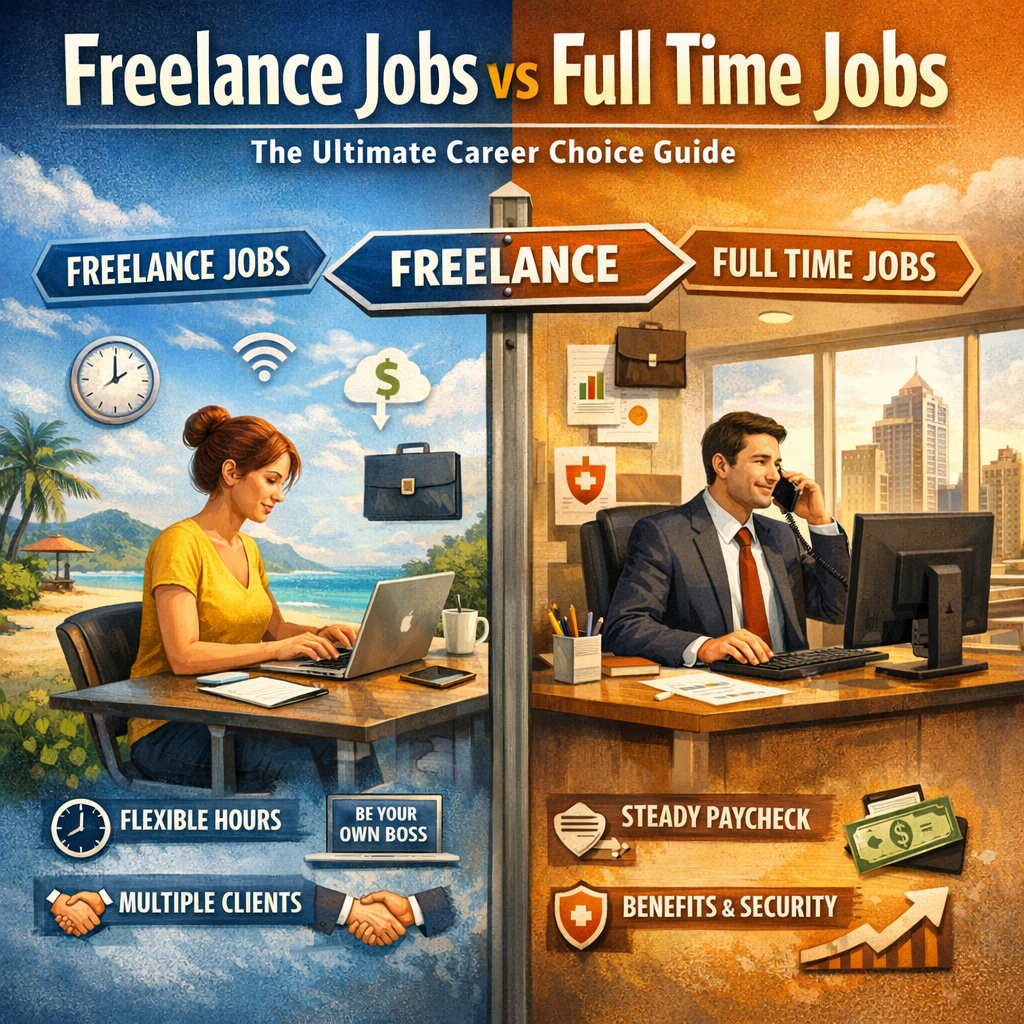
1. Flexibility and Freedom: Freelancers can choose when and where to work. This flexibility not only promotes a better work-life balance but also allows individuals to adapt their schedules around personal commitments or travel.
2. Variety of Work: One of the most appealing aspects of freelance jobs is the diversity they offer. Freelancers can take on different projects across various industries, keeping their work stimulating and engaging.
3. Income Potential: Freelancers often have the potential to earn more than their full-time counterparts. By taking on more clients and projects, they can significantly increase their earnings, especially if they specialize in a high-demand skill.
4. Skill Development: Freelancing can provide unique opportunities to develop a wide range of skills. Working with various clients allows freelancers to adapt their expertise to meet different needs, leading to continuous learning and professional growth.
Understanding Full Time Jobs
Full time jobs typically offer more stability and structure compared to freelance work. Employees work set hours for a single employer and usually enjoy benefits such as health insurance, retirement plans, and paid leave. Full time positions can be found in nearly every sector, from healthcare and education to technology and finance.
Advantages of Full Time Employment
1. Stability and Security: One of the most significant advantages of full time jobs is financial stability. Employees can rely on a steady paycheck, which can alleviate financial stress and allow for long-term planning.
2. Employee Benefits: Full time roles typically come with a range of benefits, including health insurance, retirement plans, and paid vacations. These perks can be vital for individuals planning their future or supporting a family.
3. Structured Environment: For those who thrive in a structured setting, full time jobs often provide predictable hours and responsibilities. This environment can foster a sense of routine and enable easier collaboration with colleagues.
4. Career Advancement Opportunities: Many full time positions offer clear pathways for career progression. Employees can receive promotions based on performance, establish mentorship relationships, and participate in professional development programs.
What Should You Consider in Your Career Choice?
When weighing the benefits of freelance jobs versus full time employment, it’s essential to evaluate your personal and professional goals. A few key considerations can help clarify the ideal career choice for you.
Lifestyle and Work-Life Balance
Consider what lifestyle you envision. If you prioritize flexibility, freelancing might be a better fit. Conversely, full time jobs often provide a more stable routine, which can be beneficial for those who thrive on structure.
Financial Goals
Assess your financial situation and future aspirations. Freelancers may need to budget for variable income, while full time employees typically benefit from a consistent paycheck. If financial security is your top priority, a full time job might be advantageous, especially if it offers robust benefits.
Professional Development
Think about your long-term career trajectory. Freelancers often have the advantage of rapidly diversifying their skill sets, while employees may have access to dedicated training and mentorship. Depending on your industry and personal goals, one path may offer greater opportunities for growth than the other.
Risk Tolerance
Freelancing can come with uncertainty, particularly regarding income stability and job security. If you are comfortable taking risks and navigating the ebb and flow of freelance work, it could be a rewarding option. Alternatively, those who prefer a degree of security might find full time employment to be more suitable.
Conclusion
The choice between freelance jobs and full time jobs ultimately hinges on your individual circumstances, preferences, and career ambitions. By carefully evaluating the benefits and drawbacks of each option, you can make an informed decision that aligns with your lifestyle and professional goals. Whether you choose the freedom of freelance work or the stability of full-time employment, understanding both paths will empower you to create a fulfilling career.