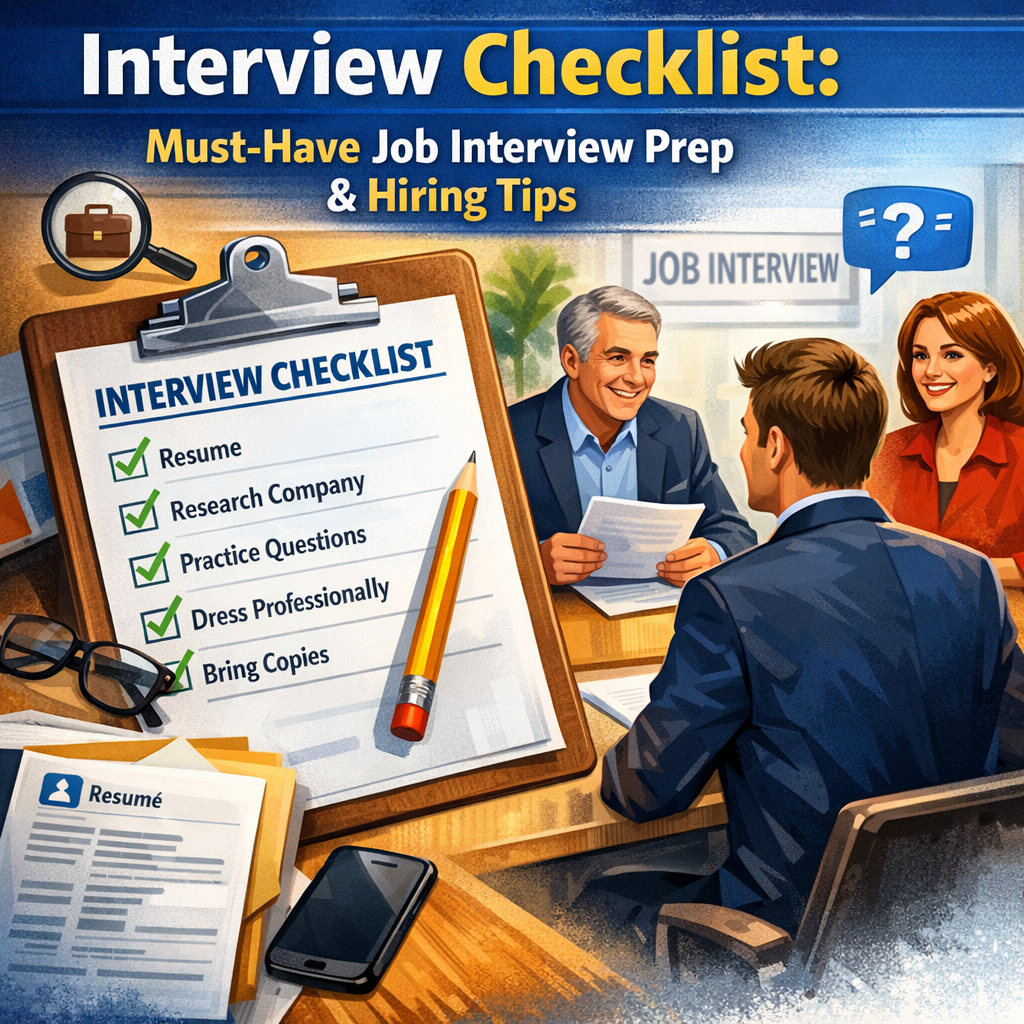
Interview Checklist: Must-Have Job Interview Prep & Hiring Tips
An effective interview checklist is essential to navigating the often nerve-wracking world of job interviews smoothly and confidently. Whether you’re a candidate preparing to face potential employers or a hiring manager aiming to streamline your recruitment process, having a well-structured checklist can significantly increase your chances of success. This guide will walk you through comprehensive job interview prep steps and essential hiring tips that will make your interview experiences more productive and less stressful.
Why an Interview Checklist is Crucial
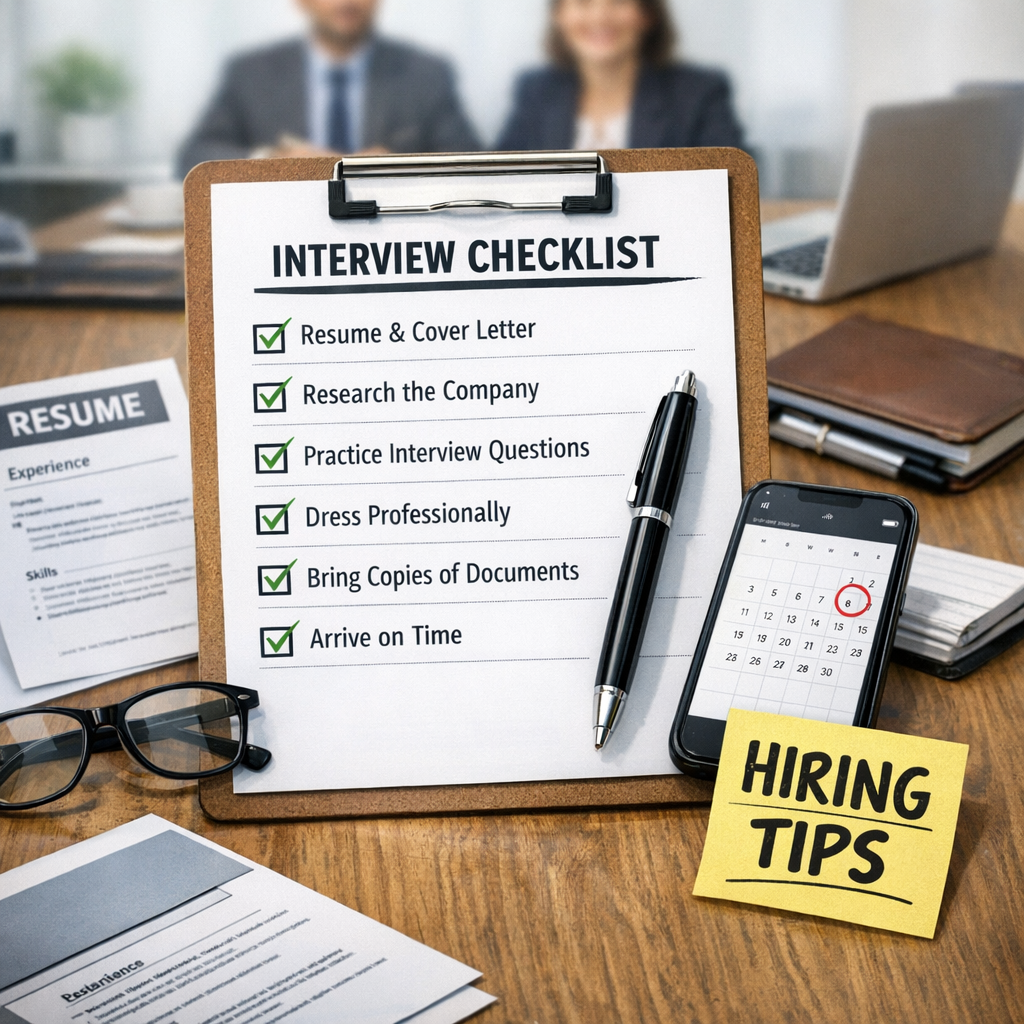
Preparation is the foundation of success in any job interview. An interview checklist helps you organize your thoughts, documents, and plans to ensure nothing is overlooked. It reduces anxiety by providing a mental roadmap and helps both applicants and interviewers maintain focus on key objectives.
For candidates, it guarantees that you present your best self. For hiring managers, it aids in evaluating candidates consistently and objectively. Before delving into the specifics, it’s helpful to understand what aspects an ideal job interview prep process encompasses.
Interview Checklist for Candidates: Essential Job Interview Prep
1. Research the Company and Role
Begin with thorough research about the company’s mission, values, products, culture, recent news, and the specifics of the role you’re applying for. Check their website, social media channels, and recent press releases. Understanding these elements allows you to tailor your answers in a way that shows alignment with the company’s goals and culture.
2. Review Your Resume and Work Samples
Study your resume carefully and be ready to discuss any detail on it. Prepare any supporting work samples, portfolios, or case studies if relevant. Familiarity with your experiences and achievements boosts confidence and helps you articulate your value proposition clearly.
3. Prepare Answers for Common Interview Questions
Practice answering frequently asked questions such as “Tell me about yourself,” “Why do you want this job?” and “What are your strengths and weaknesses?” Additionally, prepare responses to situational and behavioral interview questions using the STAR method (Situation, Task, Action, Result) to structure your answers effectively.
4. Plan Your Questions for the Interviewer
Interviews are two-way conversations. Prepare thoughtful questions about the team, company culture, expectations, and growth opportunities. This demonstrates your genuine interest and helps you assess if the company is the right fit for you.
5. Organize Your Interview Essentials
On the day of, bring multiple copies of your resume, a list of references, a notepad, pens, and any other relevant documents. Make sure your interview outfit is clean, professional, and appropriate for the company environment.
6. Rehearse and Manage Logistics
Rehearse with a friend or mentor to polish your delivery. Confirm the interview time, date, location, and know how you will get there. If your interview is virtual, test your technology in advance to avoid last-minute technical glitches.
Interview Checklist for Hiring Managers: Hiring Tips for Effective Recruitment
1. Define Job Requirements Clearly
Before advertising the position, ensure job descriptions are comprehensive and clear. Specify the skills, experience, and qualifications needed so that candidates self-select appropriately.
2. Screen Candidates Systematically
Use standardized screening methods such as application tracking systems (ATS), scoring rubrics, or initial phone interviews. This ensures a fair assessment and shortlists candidates who best meet the criteria.
3. Prepare Structured Interview Questions
Develop a consistent set of questions that align with the job’s core competencies and company values. Structured interviews reduce bias and enhance predictive validity when it comes to candidate performance.
4. Create a Comfortable Interview Environment
Set the tone by greeting candidates warmly and explaining the interview process. This helps candidates relax and communicate more openly, allowing you to better gauge their true fit for the role.
5. Take Detailed Notes and Evaluate Fairly
Record key points during the interview and evaluate candidates based on predefined criteria. Avoid snap judgments and check for alignment with both skill requirements and cultural fit.
6. Follow Up Promptly
Keep candidates informed about their status post-interview. Timely communication reflects well on your organization and maintains a positive candidate experience, which can affect your employer brand.
Additional Tips to Master Your Interview Process
– Stay Positive and Professional: Both candidates and interviewers should maintain a positive, respectful tone regardless of circumstances.
– Leverage Technology: Use video interviews when appropriate to widen your candidate pool and save time.
– Include Others in the Hiring Process: Panel interviews or multiple rounds can provide diverse perspectives on candidate suitability.
– Reflect and Improve: After each round, review what went well and what could be improved for future interviews.
Conclusion
Incorporating a detailed interview checklist into your job interview prep or hiring workflow can dramatically improve outcomes for everyone involved. Candidates feel more confident and present themselves authentically, while hiring managers gain structure and clarity when selecting top talent. By paying close attention to preparation, communication, and follow-up, both sides move closer to fulfilling, successful professional matches.
Remember, effective interview preparation isn’t just about answering questions but about building connections and understanding—qualities that ultimately lead to long-term career and organizational success.