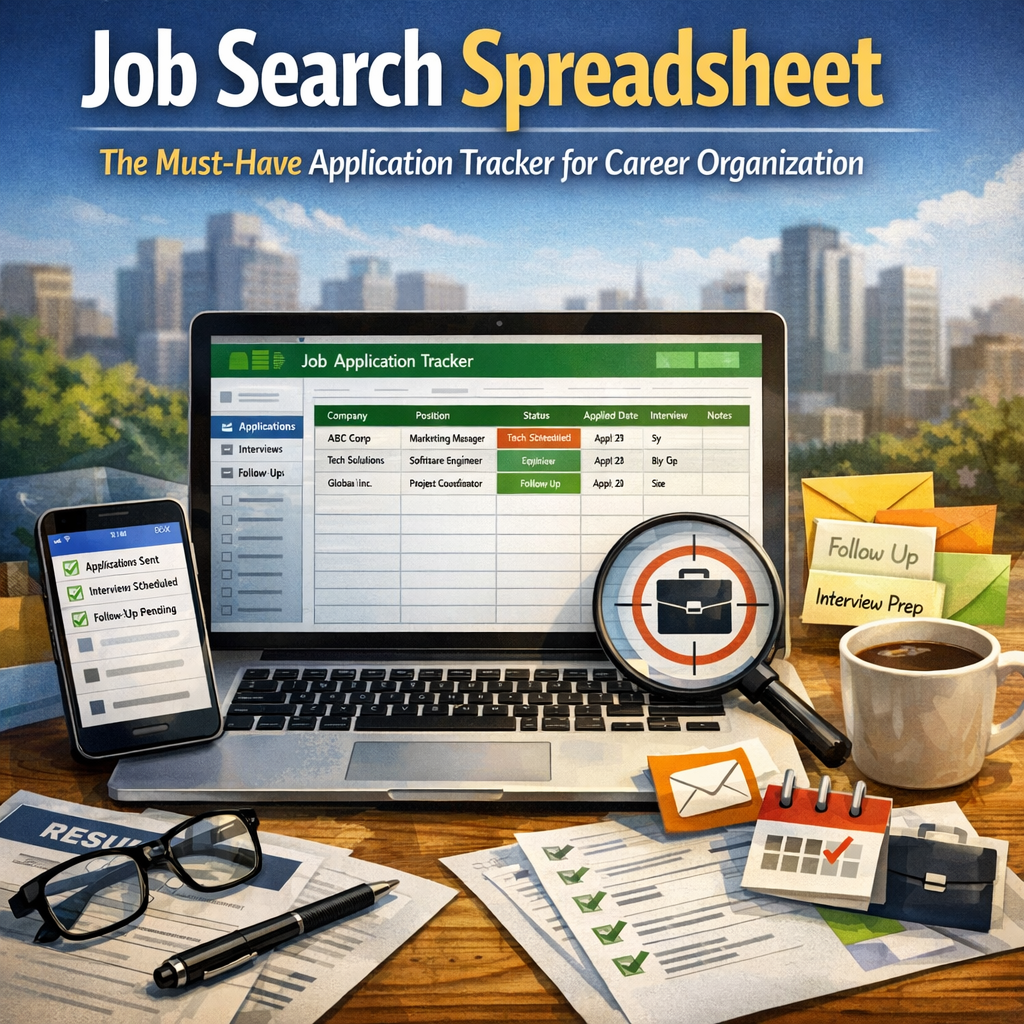
Job Search Spreadsheet: The Must-Have Application Tracker for Career Organization
In today’s competitive job market, staying organized during your job hunt is essential. A job search spreadsheet can be a game-changer, serving as a powerful application tracker that streamlines your efforts and boosts productivity. Whether you’re applying for multiple roles, juggling different deadlines, or aiming to tailor your applications, this tool provides clarity and control over an often overwhelming process.
Why a Job Search Spreadsheet is Essential
The job search journey can quickly become chaotic. Between tracking companies, roles, application deadlines, interview dates, and follow-ups, it’s easy to lose track or miss critical steps. A job search spreadsheet functions as a centralized hub, allowing you to manage all pertinent information in one place.
This digital organizer is particularly valuable because it offers:
– Visibility: You can see at a glance how many jobs you’ve applied to, where you stand with each application, and upcoming tasks.
– Prioritization: By tracking deadlines and responses, you can focus on the most urgent or promising opportunities.
– Customization: Unlike generic to-do lists, a spreadsheet can be tailored to fit your unique needs, including columns for company info, application status, contact details, interview notes, and more.
Building an Effective Application Tracker
To maximize your career organization, your spreadsheet should include essential fields that capture every aspect of your job search. Below are key components to incorporate:
1. Job Listing Details
Start by including the job title, company name, industry, location, and job description or link to the listing. This information keeps you informed about the roles you are pursuing and helps you avoid duplication.
2. Application Dates and Deadlines
Track the date you applied, application deadlines, and any follow-up timings. Timely submissions and follow-ups can significantly influence your chances of success.
3. Status Updates
Create a column to note the current status of each application: submitted, under review, interview scheduled, offer extended, rejected, or withdrawn. This helps you quickly assess progress and plan next steps.
4. Contact Information
List hiring manager names, recruiter contacts, or referral sources linked to the application. Having these details handy ensures you can reach out promptly if necessary.
5. Interview and Follow-Up Notes
Record interview dates, formats (phone, video, in-person), and preparation notes. After interviews, jot down impressions, feedback, or follow-up reminders to stay engaged.
6. Outcome and Lessons Learned
Log the final result for each application and any insights gained during the process. This reflection can inform your approach for future applications.
Tips for Optimizing Your Job Search Spreadsheet
– Use Color Coding: Visually differentiate statuses with colors — for example, green for interviews scheduled, yellow for pending follow-up, and red for rejections. This makes your progress easy to scan.
– Leverage Filters and Sorting: Allow yourself to sort by date, status, or company to prioritize applications efficiently.
– Link Documents: Attach your tailored resume, cover letter, or portfolio links directly in your spreadsheet entries.
– Update Daily: Consistently maintaining the spreadsheet ensures accuracy and aids in strategic decision-making.
Digital Tools to Enhance Your Application Tracker
While spreadsheets can be as simple or advanced as you want, various platforms enhance their functionality:
– Google Sheets: Convenient for real-time updates and access across devices. Offers collaboration options if you are seeking advice from mentors or career coaches.
– Microsoft Excel: Ideal for complex tracking with advanced formulas and customization.
– Job Search Apps with Integration: Some apps allow export and import of data between job boards and your spreadsheet for streamlined updates.
Choose a platform you find intuitive to encourage regular use — your consistency is key.
The Impact of Career Organization on Job Hunting Success
Approaching your job search with a structured system like a job search spreadsheet shifts your mindset from reactive to proactive. When all your applications and related tasks are clearly mapped out, you reduce anxiety, avoid missed opportunities, and invest your time more efficiently.
Moreover, career organization builds confidence. Knowing exactly where you stand with each application and having a plan for follow-up actions gives a sense of control over an often unpredictable process. This empowerment often translates to better communication with recruiters and stronger interview preparation — factors that can distinguish you from other candidates.
Final Thoughts
A job search spreadsheet is more than just a list — it’s an essential application tracker that supports your career organization and propels you towards landing your next role. By investing time upfront to set up your spreadsheet, you gain a tool that can simplify your job hunt, improve your productivity, and ultimately increase your chances of success.
If you haven’t started one yet, now is the perfect time. Organization, clarity, and consistent tracking might just be the edge you need in your career journey.