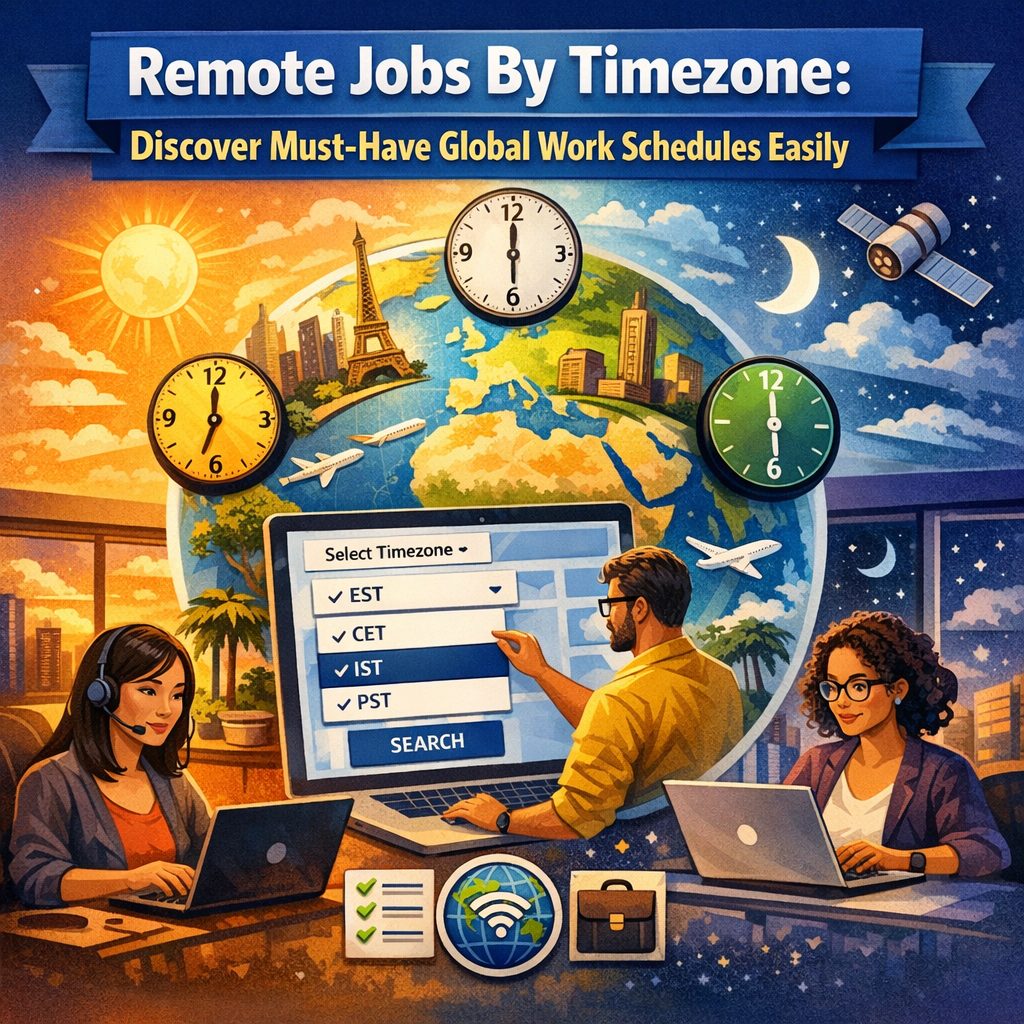
Remote Jobs By Timezone: Discover Must-Have Global Work Schedules Easily
In today’s increasingly connected world, remote jobs by timezone have become a crucial consideration for both employers and job seekers. As more companies embrace flexible and location-independent work models, understanding how to navigate global work schedules effectively is essential. This approach not only ensures smooth collaboration across continents but also boosts productivity, aligns expectations, and increases job satisfaction. In this article, we explore the nuances of remote jobs segmented by timezone, highlight the advantages of global work schedules, and introduce the role of online role filters in simplifying your job hunt.
Why Remote Jobs By Timezone Matter

Working remotely has its perks—such as no daily commute, flexible hours, and a broader range of job opportunities—but when your team is scattered across multiple timezones, coordination becomes complex. Remote jobs sorted by timezone help bridge this gap by aligning working hours, facilitating real-time communication, and preventing the burnout caused by working odd or unsustainable schedules.
For instance, a company headquartered in New York that hires remote employees in Europe, Asia, and South America must consider overlapping hours for meetings, project handoffs, and daily check-ins. By categorizing roles according to timezone compatibility, employers can maintain workflow efficiency while fostering a positive work culture.
Understanding Global Work Schedules
Global work schedules refer to the varied working hours and shifts that accommodate employees across different regions worldwide. These schedules often include asynchronous workflows, flexible start and end times, or staggered shifts based on geographic location. Understanding and adapting to global work schedules is vital in today’s remote landscape, especially for companies aiming to create truly worldwide teams.
Key Benefits of Global Work Schedules:
– Improved Collaboration: When teams have overlapping hours, collaboration becomes seamless.
– Employee Well-being: Working in compatible time zones reduces stress and improves work-life balance.
– Business Continuity: Diverse timezones allow for ‘follow-the-sun’ models where work continues non-stop globally.
– Talent Pool Expansion: Employers can recruit the best talent without geographic restrictions.
How Online Role Filters Simplify Finding Remote Jobs By Timezone
Searching for remote jobs across global time zones can be overwhelming without proper tools. This is where online role filters come into play. Many job platforms have introduced sophisticated filtering options that allow applicants to search specifically for remote jobs by timezone or location, streamlining the application process.
What Are Online Role Filters?
Online role filters are search tools embedded in job portals that let users narrow down listings according to specific criteria such as job function, seniority, remote work options, and importantly, geographic or timezone preferences.
Advantages of Using Online Role Filters:
– Time-Saving: Quickly eliminate jobs that don’t fit your timezone or preferred working hours.
– Better Job Matching: Focus only on roles that align with your lifestyle and schedule.
– Increased Application Success: Applying to positions aligned with your availability enhances your chances of succeeding in the recruitment process.
Tips for Managing Remote Jobs by Timezone Successfully
Navigating remote jobs by timezone requires not only finding the right job but also mastering a few skills and habits to thrive.
1. Communicate Proactively
Clear communication about availability and time constraints is the foundation of successful remote work across time zones. Use shared calendars, status updates, and plan meetings thoughtfully to respect everyone’s local time.
2. Use Technology to Your Advantage
Leverage tools like Slack, Zoom, and project management platforms that support asynchronous work or record meetings for those who can’t attend live sessions.
3. Set Boundaries
Avoid the temptation to work odd hours constantly. Establish clear start and end times to maintain work-life balance, which is more important when timezone differences are involved.
4. Embrace Flexibility
Be open to some flexibility in your working hours, especially for crucial collaboration periods. This compromise helps build stronger team rapport and effective workflows.
The Future of Remote Work In Global Timezones
As remote work becomes mainstream, companies will increasingly structure their operations around global work schedules, leveraging diverse talent pools and new technologies. The sophisticated use of online role filters combined with a deeper understanding of timezone dynamics will empower both employers and employees to find the perfect match.
In conclusion, remote jobs by timezone offer immense potential for a balanced, productive, and inclusive future of work. By embracing global work schedules and utilizing effective tools such as online role filters, you can navigate the global employment landscape with confidence and ease. Whether you are a job seeker or an employer, recognizing and optimizing timezone-based remote work is the key to thriving in today’s interconnected economy.