
Exploring School Office Jobs: Must-Have Education Admin Roles and Support Careers
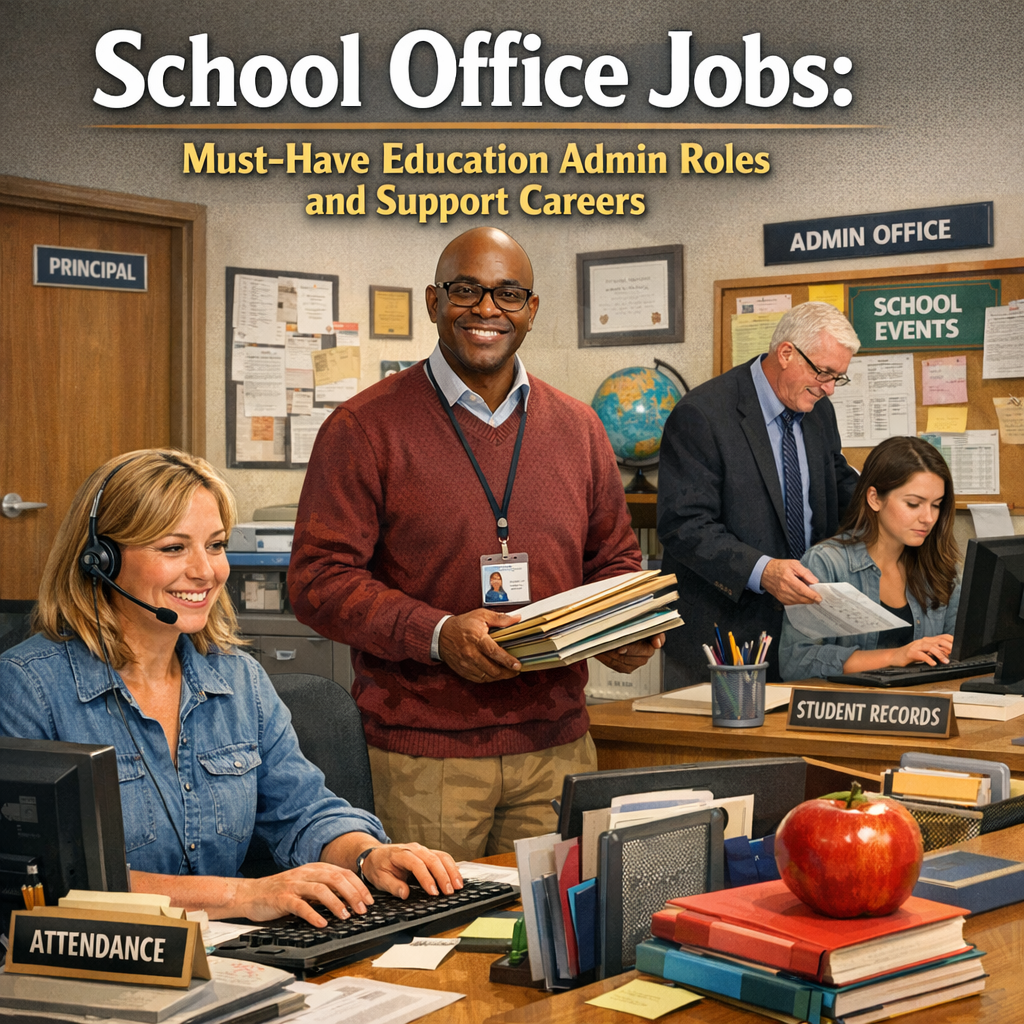
School office jobs are essential to the smooth running of any educational institution. Behind the scenes, education admin roles and support staff work diligently to ensure that schools operate efficiently, allowing teachers and students to focus on learning and growth. These roles, often overlooked, are critical to creating a productive and supportive environment. In this article, we will delve into the most important school office jobs, highlighting key responsibilities and the impact of support staff work within educational settings.
What Are School Office Jobs?
School office jobs encompass a wide range of positions responsible for handling administrative tasks, maintaining records, managing communications, and supporting daily school operations. Unlike teaching roles, these positions focus on the organizational backbone of a school, contributing to a smooth educational experience for faculty, staff, students, and parents alike.
Key Education Admin Roles in Schools
1. School Secretary or Administrative Assistant
One of the most common education admin roles is that of the school secretary or administrative assistant. These professionals are often the first point of contact for visitors, students, and parents, handling inquiries and managing appointments. Their responsibilities also include maintaining student records, scheduling meetings, coordinating events, and assisting with correspondence.
Efficient secretarial support helps schools maintain order and streamline communication, making this role invaluable in busy school environments.
2. Registrar
Registrars play a vital role in the management of student information and enrollment processes. In this position, professionals oversee admissions, track attendance, manage grades and transcripts, and often support scheduling for classes and exams. Accurate record-keeping by registrars ensures compliance with educational regulations and facilitates smooth transitions for students throughout their academic journey.
3. Attendance Officer
Attendance officers focus specifically on monitoring student attendance and addressing issues related to absenteeism. By working closely with students, parents, and teachers, attendance officers help improve student engagement and reduce truancy rates. Their role also involves generating reports and analyzing attendance patterns to provide insights for school improvement plans.
The Importance of Support Staff Work in Schools
Support staff work extends beyond purely administrative tasks and includes roles like school counselors, IT support staff, and facilities coordinators. Although these positions might not always fall under traditional school office jobs, they contribute significantly to the overall educational environment.
For example, IT support staff ensure that technological systems, including communication platforms and learning management systems, function smoothly. Facilities coordinators manage the physical environment of the school, keeping classrooms and common areas safe and in good condition.
How School Office Jobs Enhance Educational Outcomes
Effective education admin roles and support careers have a notable influence on the quality of education students receive. When school office jobs are performed efficiently:
– Teachers can devote more time to instructional and classroom activities.
– Administrative processes become less cumbersome, reducing errors and delays.
– Parents and guardians receive timely, accurate communication.
– Students benefit from organized schedules, well-maintained facilities, and prompt attendance tracking.
By providing critical support, school office jobs create a foundation for academic success and a positive school culture.
Skills Required for Success in School Office Jobs
Those interested in pursuing school office jobs should cultivate a range of skills, including:
– Strong communication abilities: Handling inquiries and coordinating with various stakeholders requires clear and empathetic communication.
– Organizational skills: Managing multiple tasks, from scheduling to record-keeping, demands exceptional organization and attention to detail.
– Technological proficiency: Familiarity with office software, student information systems, and communication tools is increasingly vital.
– Problem-solving: Addressing the daily challenges that arise in a dynamic school setting requires adaptable problem-solving skills.
– Discretion and professionalism: School office staff often handle sensitive information and must operate with confidentiality and integrity.
Career Pathways and Opportunities
School office jobs offer rewarding career pathways for those passionate about education but who prefer non-teaching roles. Many professionals start as administrative assistants and advance to specialist positions such as registrars or operations managers. There are also opportunities to specialize in roles related to finance, human resources, or student services within the education sector.
In addition, gaining certifications in office administration, records management, or educational leadership can enhance career prospects and open doors to higher-level positions.
Conclusion
School office jobs and associated education admin roles are indispensable components of a well-functioning school system. Support staff work behind the scenes to make the day-to-day educational experience as efficient and effective as possible. Understanding the diversity, responsibilities, and importance of these roles highlights the value they add not only to schools but also to the communities they serve. Whether you are considering a career in education administration or simply want to appreciate the work that keeps schools running, these roles merit recognition and respect for their vital contributions to education.