Work History Resume: Must-Have CV Structure Tips for Effortless Employment Details Formatting
When it comes to creating a compelling work history resume, the way you organize your employment details can make all the difference. A well-structured CV not only highlights your professional experience but also enables recruiters to quickly understand your qualifications. Mastering employment details formatting is essential for job seekers who want their resumes to stand out amidst a flood of applications. In this article, we will explore must-have CV structure tips that will help you effortlessly format your work history resume with clarity and impact.
Understanding the Importance of Work History Resume Organization
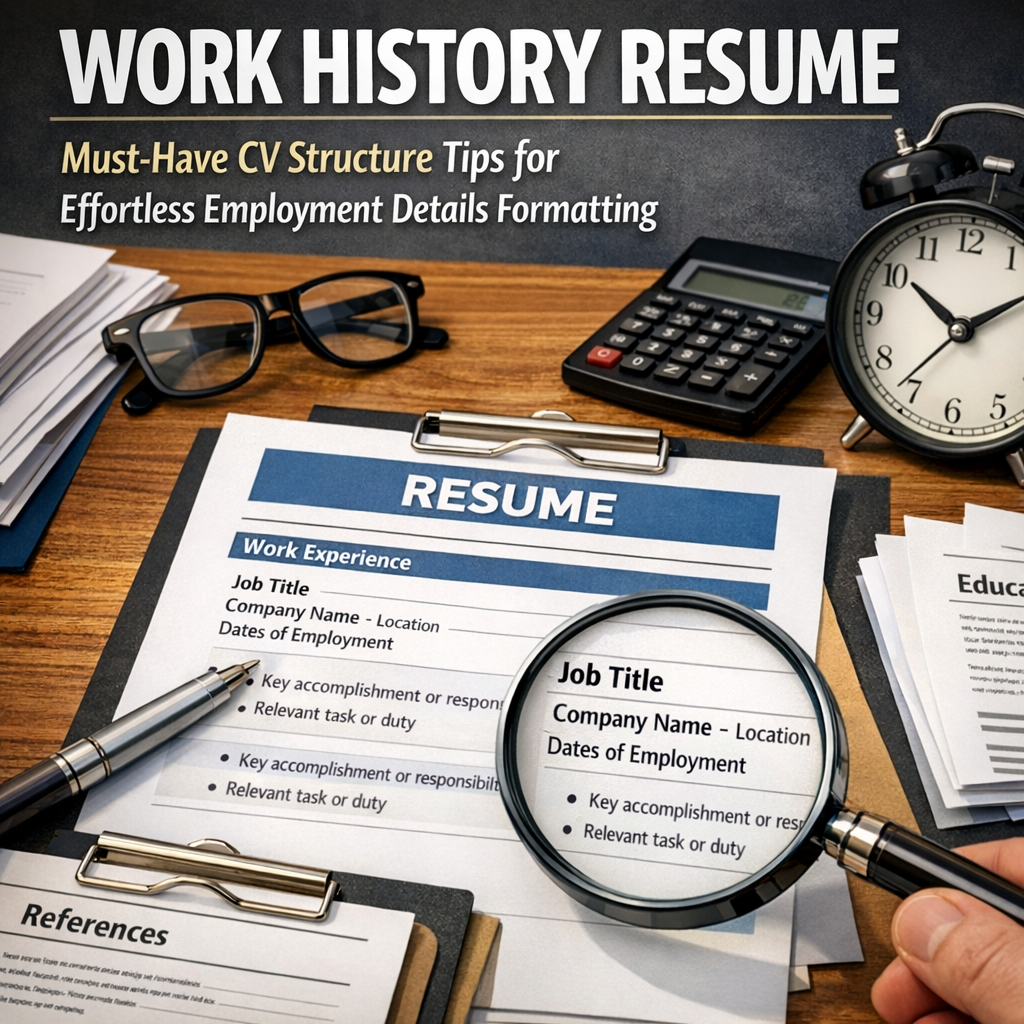
Your work history resume is more than just a list of previous jobs; it’s a narrative showcasing your career progression and skills. Hiring managers typically spend only seconds scanning a resume. If your employment details are poorly formatted or scattered, you risk losing their interest. Proper formatting improves readability, highlighting your achievements and career journey.
Before diving into the formatting specifics, ensure you have a clear understanding of what information employers are looking for in your work history section, including job titles, company names, dates of employment, and notable accomplishments.
Essential CV Structure Tips for Employment Details Formatting
1. Use Reverse Chronological Order
One of the foundational cv structure tips is to list your work history in reverse chronological order, starting with your most recent position. This layout allows recruiters to see your latest and often most relevant experience first. It also clearly illustrates your career progression over time.
2. Include Clear Job Titles and Company Names
Each entry in your work history should begin with your official job title followed by the company name. To enhance clarity, use bold text or a slightly larger font size for these elements. This approach helps recruiters quickly identify your roles and employers without having to read through the entire section.
3. Provide Accurate Employment Dates
Employment details formatting should include the start and end dates for each job listed. It’s best to use a consistent format, such as “Month Year – Month Year” (e.g., January 2020 – June 2023), across all entries. If you are currently employed, you can write “Present” or “Current” as the end date.
4. Summarize Key Responsibilities and Achievements
To make your work history resume more impactful, include bulleted lists summarizing your main duties and accomplishments under each job entry. Use strong action verbs and quantify results when possible (e.g., “Increased sales by 20% over six months”). This approach clearly demonstrates your contributions and skills.
5. Keep Formatting Consistent and Clean
Consistency is crucial for effective employment details formatting. Use the same font type, size, and spacing throughout the work history section. Avoid clutter and excessive details; keep each job description concise while focusing on relevant information. White space can improve readability, so don’t cram too much text into one section.
Additional Tips for Optimizing Your Work History Resume
Tailor Your Work History to the Job
While it’s tempting to include every job you’ve ever had, your work history resume should prioritize relevance. Choose roles and experiences that best align with the job you’re applying for, emphasizing skills and achievements that match the employer’s requirements.
Use Keywords from the Job Description
Incorporate keywords and phrases from the job posting directly into your employment descriptions. Many companies use Applicant Tracking Systems (ATS) to screen resumes, so this tactic increases your chances of passing initial filters.
Highlight Promotions and Career Growth
If you have been promoted within the same company, consider listing the company once and detailing each position held beneath it with appropriate dates. This format showcases your professional development and loyalty.
Address Employment Gaps Strategically
If you have gaps in your work history, you can address them subtly by focusing on the skills and experiences gained during those periods, such as volunteering, freelance work, or professional development courses.
Final Thoughts on Employment Details Formatting
Perfecting the formatting of your work history resume is a critical step in your job search journey. By implementing these cv structure tips, you create a document that is not only visually appealing but also clearly communicates your qualifications. Remember, recruiters appreciate simplicity and clarity, so keep your employment details organized, consistent, and relevant.
Investing time and effort into structuring your work history effectively will increase your chances of securing interviews and ultimately landing your dream job. Use these tips to make your resume a powerful tool that effortlessly showcases your professional experience.